Bedding | Sleep Science
How Wool Bedding Balances Warmth, Moisture, and Care
Wool can bring a particular kind of steadiness to a bed: insulating without feeling sealed in, and able to absorb water vapor while remaining comparatively comfortable against the skin. But “wool bedding” covers a range of fibers, fills, and constructions. Understanding those differences—and following the care label—helps set realistic expectations for warmth, feel, and longevity.
Published November 4, 2026
A fiber built for changeable conditions
Wool begins with a simple biological task: helping sheep remain insulated as weather shifts. Its structure carries that history into bedding. A wool fiber has a crimped form that can trap pockets of still air, and its surface and inner structure interact with moisture differently from many smooth synthetic fibers. In a mattress pad, topper, or pillow, those characteristics can influence how a sleep surface feels over the course of a night.
That does not mean wool automatically makes a bed cool in summer or warm in winter. Bedding is a layered system. Room temperature, humidity, pajamas, blankets, mattress construction, and a sleeper’s own heat production all matter. Wool’s contribution is more nuanced: it can provide insulation while allowing air to move through a suitable construction, and it can take up some moisture vapor before the surface feels clammy. The result depends on the amount of wool, how it is processed, what surrounds it, and how tightly the layers are quilted or enclosed.
For readers considering wool bedding, the useful question is not simply whether wool is “temperature regulating.” It is how a particular wool layer is made, what job it is meant to do, and whether its care requirements fit everyday life.
Warmth without a single fixed temperature
Insulation works by slowing the movement of heat. In wool batting, the fibers’ crimp and loft can create small spaces that hold air. Still air is a poor conductor of heat compared with moving air, so a lofty layer may help reduce heat loss from the body. That can make a bed feel inviting in a cool room or add a soft buffer above a mattress.
Yet warmth is not a fixed property that can be judged from the word “wool” alone. A thin, lightly filled pad will behave differently from a deep topper. Dense quilting may compress the fill and change how much air it holds. A cotton cover can contribute a different hand and airflow than a tightly woven synthetic shell. A thick duvet over the top of the bed may dominate the overall warmth, regardless of what lies beneath the fitted sheet.
Wool is also not a cooling device. It does not remove heat from the body in the way an active system would. Its appeal is that insulation and moisture interaction may help the bedding feel less prone to abrupt swings—though individual experience varies. Someone who sleeps warm may prefer a lighter wool layer and breathable sheets; someone who tends to feel cold may value additional loft. Neither preference can be reduced to a universal rule.
Construction affects the sensation, too. A wool-filled mattress pad generally adds a modest cushion and a softer surface, while a thicker topper can change pressure distribution and the perceived firmness of a mattress. Wool can compress under body weight, but the degree and pace depend on fill quantity, quilting, fiber preparation, and use. When comparing layers, check thickness and construction details rather than assuming every item called a pad or topper provides the same level of cushioning.
Moisture: absorption is not the same as drying
During sleep, the body releases heat and moisture. Some moisture leaves as vapor; some may collect in bedding, especially when the room is humid, the sleeper is warm, or airflow is limited. Wool fibers can absorb water vapor into their structure, which may help a fabric or fill feel less immediately damp than a surface that holds moisture at its exterior. That capacity is one reason wool is often discussed in relation to moisture management.
Absorbing moisture, however, does not make a bed self-drying. The vapor must still move out of the bedding and into the surrounding air. A mattress enclosed in a non-breathable protector, a bed made tightly soon after waking, or a persistently humid bedroom can slow that process. Regularly airing the bed and allowing bedding to dry between uses are sensible practices, whatever the filling.
Wool’s moisture behavior also depends on the product’s complete assembly. A wool fill under a breathable cotton cover may behave differently from one sealed within a less permeable fabric. Quilting patterns, fill density, and the presence of other layers all shape airflow and comfort. Product descriptions may use broad terms such as “moisture wicking,” but it is worth looking for clear details about the wool, cover, and care before drawing conclusions.
For people who experience night sweats or persistent overheating, bedding adjustments may be helpful but are not a diagnosis or treatment. Persistent symptoms can have many causes, including medications or health conditions, and may warrant a conversation with a qualified health professional. Material choice is one part of the sleep environment, not a substitute for medical advice.
The fiber, fill, and fabric all matter
Labels often identify wool as the main material, but the fiber’s origin and preparation can vary. Merino wool is known for relatively fine fibers, while other wool types may feel more textured. Fiber length, crimp, cleanliness, and processing can affect softness, resilience, and how the fill sits inside a product. A label that states “100% wool fill” answers one question; it does not, on its own, describe the feel or performance of the finished bedding.
Fill weight is another useful detail. More wool can mean more loft and insulation, but a higher fill weight does not necessarily make a product better for every sleeper. The cover fabric and quilting determine how the fill is held in place and how the surface feels. Cotton covers are common, but cotton weave and weight vary. A cover designed to contain loose fibers may feel smoother or less airy than a lighter construction.
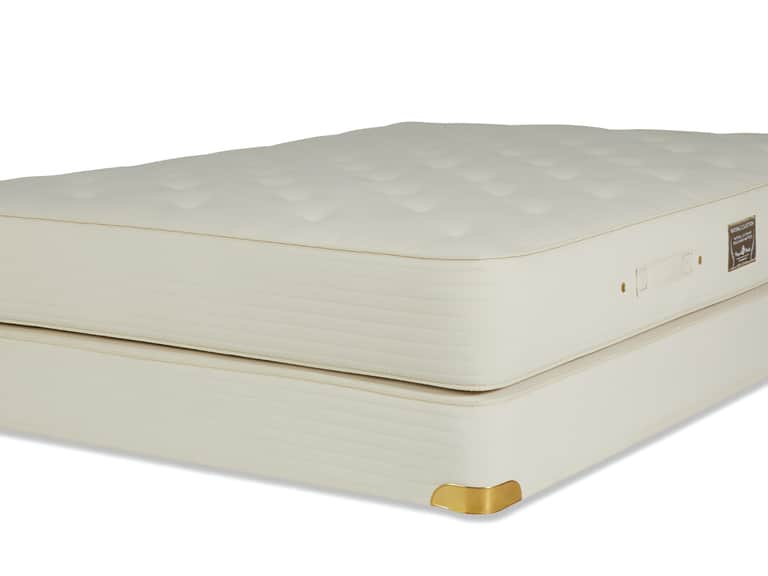
Quilting and tufting are not merely decorative. They help hold batting in position, limit shifting, and shape the layer’s profile. Closely spaced stitching can compress the fill at regular intervals; other constructions use larger channels or anchor points. When browsing a wool pad, consider whether the stitching appears suited to keeping the filling distributed over time, and whether the listed dimensions will fit the mattress securely.
Some wool bedding is designed as a surface cushion, while other products place wool deeper within a mattress. The difference matters. A removable pad is easier to air and may be simpler to replace than an integrated mattress layer. Conversely, an integrated wool layer is not something to wash or handle separately. Read the product description carefully so the terms “pad,” “topper,” and “wool layer” are not treated as interchangeable.
Choosing a wool mattress pad or topper
Start with the problem you hope to solve. If the goal is to add a little cushioning or protect the mattress from ordinary wear, a relatively thin, fitted pad may be enough. If the mattress feels uncomfortably firm and you want a more noticeable change in surface feel, a thicker layer could be more relevant—but wool’s response differs from that of foam or latex. It may provide gentle loft rather than a deeply contouring cradle.
Next, consider fit. Mattress depth has grown in many bedrooms, and pocket depth is not a trivial specification. A pad that is too shallow may pull loose at the corners; a loose layer can bunch and disturb sleep. Check the product’s stated pocket depth or attachment method against the mattress, including any existing protector or topper that will sit underneath or above it.
Think about the sleep climate you are trying to create. A wool-filled layer may be appealing if you want natural insulation with a breathable feel, but it cannot compensate for every warm or humid room. Lightweight sheets, a suitable duvet, ventilation, and the room’s temperature remain part of the equation. If you share a bed, remember that one person’s comfortable warmth may be another’s overheating.
Finally, consider upkeep before buying. A wool layer that requires professional cleaning may be a poor match for a household that needs frequent machine washing. A product that can be aired and spot-cleaned may be practical, provided spills are uncommon and the care instructions are followed. Choosing bedding is not only a matter of first-night comfort; it is also a decision about the routine you can sustain.
Care begins with the label
Wool bedding does not share one universal care method. Some products can be washed under specific conditions; others are intended for dry cleaning, spot cleaning, or airing only. The cover, stitching, backing, and construction may be more vulnerable than the wool itself. A care label is therefore more authoritative than a general rule about wool.
Before washing, identify whether the item is a removable pad, a topper with a fitted cover, or a non-removable layer. Check for limits on water temperature, agitation, detergent, drying, and ironing. If the label says dry clean, do not assume that a gentle home wash is safe. Water and mechanical action can cause shrinkage, distortion, matting, or uneven fill, and a damp, heavy layer may be difficult to dry thoroughly.
For products that permit washing, follow the stated cycle and drying method exactly. Avoid improvising with hot water or vigorous agitation. Make sure the item is fully dry before putting it back on the bed, since trapped dampness can create an unpleasant odor and may damage materials. If instructions are unclear, contact the manufacturer rather than experimenting on the full product.
For routine freshness, airing can be a lower-impact approach when the care label permits it. Pull back the covers after waking to let moisture disperse, and occasionally air removable bedding in a dry, shaded, well-ventilated place. Strong direct sun may not suit every textile or finish, so check the manufacturer’s guidance. Spot spills promptly, using only methods allowed for that product; rubbing aggressively can push soil deeper or disturb the wool fill.
Use a washable mattress protector if appropriate for the bedding system, while keeping in mind that an impermeable protector may alter airflow and surface feel. The protector should fit securely and be maintained according to its own label. Regular laundering of sheets and pillowcases, alongside sensible room ventilation, helps keep the sleep environment fresh without repeatedly washing a delicate wool layer.
Keeping loft and shape over time
Wool batting can settle with use, especially where body weight presses it night after night. Quilting and tufting help restrain movement, but no fill remains untouched by repeated compression. Gentle rotation may spread wear if the product and mattress design allow it. Do not flip a pad unless its construction and instructions make that appropriate; one-sided quilting or a fitted underside may be intended to remain in a particular orientation.
When storing wool bedding, make sure it is clean and completely dry. Follow guidance on folding or rolling, and avoid compressing it under heavy objects for long periods if maintaining loft is important. A breathable storage bag can help protect the textile from dust while allowing some air exchange. Plastic storage may trap residual moisture, so use it only if the manufacturer recommends it and the item is thoroughly dry.
Odor does not always mean a product is ruined. Wool and other natural fibers can retain a faint material scent, especially when new or after being stored. Airing in a dry, ventilated place may help. A persistent musty smell, visible mold, or dampness calls for more careful attention: remove the bedding from use, address the source of moisture, and follow professional or manufacturer guidance on cleaning and safety.
Allergies, sensitivities, and realistic expectations
Wool is sometimes described as hypoallergenic, but no bedding material can promise that every person will tolerate it. Allergies and sensitivities are individual, and reactions may relate to the fiber, dust, detergents, dyes, finishes, or other materials in the product. A tightly woven cover can keep fill enclosed, but it does not establish that a product is suitable for a particular medical condition.
People who know they react to wool should avoid relying on broad marketing language. Review the full materials list, including the cover and any backing, and seek clinical advice when needed. If a product has a return or trial policy, read its terms before purchase; a policy is not a substitute for medical guidance, but it can clarify what options exist if the feel is unsuitable.
Certification claims also deserve careful reading. A certification may apply to a specific fiber, textile, or production stage rather than the complete finished item. Look for the name of the standard and the scope of the claim, and avoid assuming that a natural-material description establishes the absence of every chemical or allergen. Clear product information is more useful than sweeping assurances.
A simple way to compare options
When two wool bedding products appear similar, compare the details that determine daily use. A short checklist can make the choice more concrete:
- Purpose: Is the item a protective pad, a cushioning layer, or a thicker topper?
- Materials: What is the fill, and what fabrics make up the cover and underside?
- Construction: How is the wool secured, and is the fill distributed in quilting, channels, or another pattern?
- Fit: What mattress depth and dimensions does it accommodate, and how does it stay in place?
- Care: Can it be washed, spot-cleaned, aired, or dry-cleaned? Are there restrictions on heat or sunlight?
- Comfort expectations: Is the intended result gentle loft, added insulation, or a noticeable change in firmness?
- Documentation: Are fiber content, care directions, and any certification claims clearly explained?
This comparison shifts attention away from one-word promises and toward the practical qualities that affect comfort and maintenance. A well-described product allows shoppers to judge whether its construction suits their room, habits, and preferences.
The balance is personal
Wool’s appeal lies in the way a natural fiber can combine loft, insulation, and moisture absorption in one material. In bedding, those properties may help create a comfortable, less clammy-feeling sleep surface, while the fiber’s structure contributes a soft layer of air-retaining fill. But the experience is shaped by much more than the raw material: fiber type, fill weight, quilting, cover fabric, room conditions, and the rest of the bed all play a part.
Care is equally specific. Wool bedding may ask for more attention than a product designed for routine machine washing, and that trade-off should be understood before it enters the laundry cycle. Read the label, air the bed when practical, keep layers dry, and choose a construction whose maintenance fits your household. These small habits help protect shape and freshness without making unsupported promises about what wool can do.
There is no single ideal wool layer for every sleeper. The best fit is the one whose warmth, cushioning, and upkeep align with your needs—and whose specifications are clear enough to support an informed decision. In a bedroom, comfort is rarely the result of one remarkable material. It is the quiet balance of fibers, airflow, fit, and care, repeated night after night.