Sleep science & education
A Closer Look at Organic Crib Mattress Materials and Fit
A crib mattress is a simple object with a demanding job: it must fit securely, provide a firm and level sleep surface, and be cared for in ways that preserve its condition. Organic fibers may appeal to families seeking particular materials, but labels alone cannot answer the most important questions. Construction, dimensions, safety guidance, and practical care all deserve a close look.
Preparing a nursery often means weighing details that seem small until they are gathered together: the texture of a sheet, the depth of a mattress, the materials tucked beneath its cover. A crib mattress is one of those details. It is a sleep surface, a carefully dimensioned part of a larger structure, and an item that may need to withstand years of regular use and cleaning.
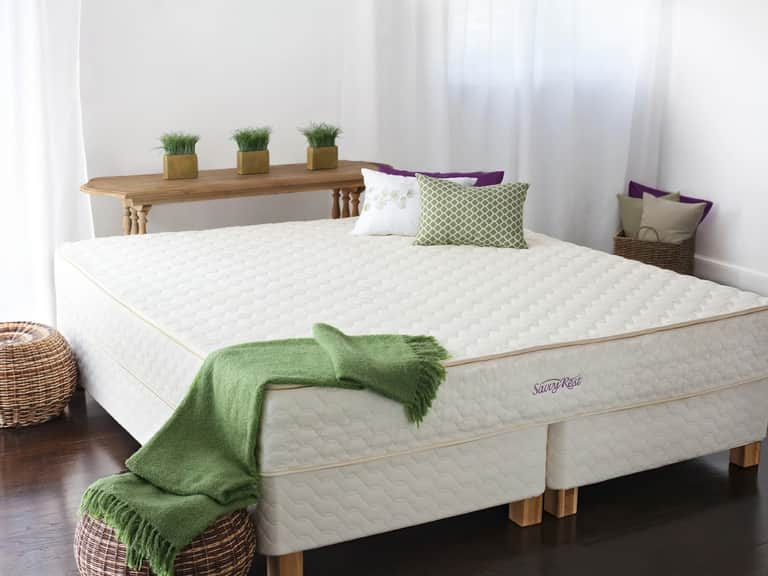
Some crib mattresses are described as organic because certain fibers or components meet a defined standard. Cotton, wool, and latex may appear in their covers, padding, or internal layers. Those materials have different properties, and the word “organic” does not, by itself, describe the mattress’s firmness, fit, complete ingredient list, or suitability for a particular crib.
The most useful approach is to consider the whole object. Read the product label and manufacturer’s instructions, verify dimensions against the crib, and follow current safe-sleep recommendations from trusted health authorities. This guide explains what to look for and why the details matter.
Start with the sleep surface, not the label
A baby’s sleep space should be arranged according to current safe-sleep guidance. The American Academy of Pediatrics recommends placing babies on their backs for every sleep, on a firm, flat, non-inclined surface intended for infant sleep, with only a fitted sheet. Keep soft objects and loose bedding out of the crib, including pillows, quilts, blankets, stuffed toys, and padded accessories.
These recommendations apply regardless of whether a mattress is made with conventional or organic materials. A natural fiber cannot substitute for a firm surface, and a certification does not establish that a product is appropriate for every crib or every use. If a product’s purpose or suitability is unclear, consult the manufacturer and ask a health professional or the relevant safety authority for guidance.
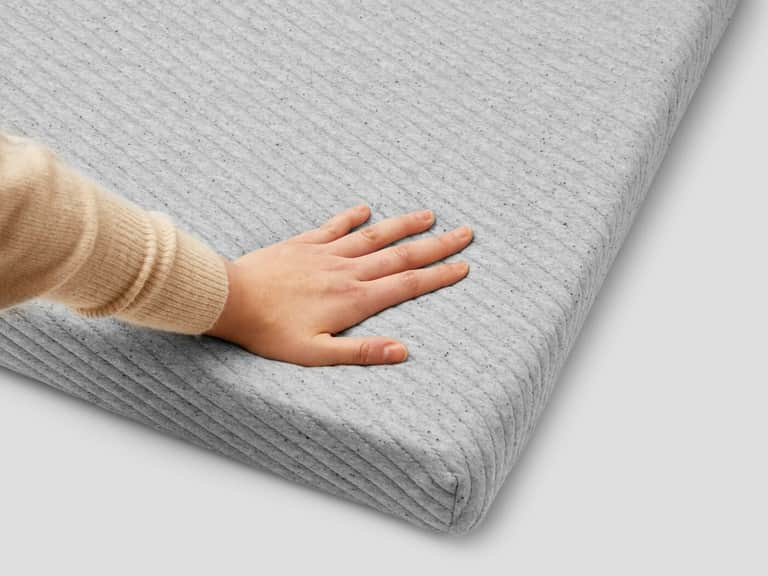
Firmness may be surprising to adults who associate a soft surface with comfort. For an infant sleep surface, however, the relevant question is not whether the mattress feels plush to an adult’s hand. It is whether it is designed and labeled for infant sleep and remains firm, flat, and properly fitted as directed. Do not add a topper or extra cushioning to change the feel unless the mattress manufacturer and current safety guidance explicitly allow it.
Mattress standards and guidance can change. Before purchasing or using a crib mattress, review current information from organizations such as the U.S. Consumer Product Safety Commission and the American Academy of Pediatrics. Follow the instructions that come with the specific crib and mattress rather than relying on an old checklist or general assumptions.
Cotton: a familiar fiber with several roles
Cotton is commonly used in mattress covers and padding. It may be woven into a fabric shell, used as batting, or included in more than one layer. Its feel and performance depend on the way it is processed and assembled, as well as on the other materials surrounding it. A cotton cover, for example, does not necessarily mean the entire mattress is made from cotton.
When a product is described as organic cotton, look for precise information about which component carries that designation. Does it refer to the cover, the batting, or both? Is the claim supported by a named certification, and does the certificate apply to the finished product or only to a particular material? Clear answers allow families to distinguish a documented claim from a broad marketing phrase.
Labels can also provide information about fabric composition, country of manufacture, and care. Those details matter in everyday life. A mattress that cannot be immersed in water, for example, needs a different cleaning approach from a removable, washable cover. The correct method is the one specified by the maker; a general assumption about cotton is not a care instruction.
Regardless of the fiber, the mattress should be used with a fitted sheet made for its dimensions and should remain free of unapproved layers. Avoid adding a loose protector or pad that could shift, bunch, or change the surface. If a protective accessory is under consideration, check that it is specifically permitted by the mattress and crib instructions and consistent with current infant safe-sleep guidance.
Wool: warmth, moisture, and construction questions
Wool may be used as batting, padding, or one part of a layered mattress. The fiber is known for interacting with moisture and for providing insulation, but those general qualities do not tell a parent exactly how a particular mattress will feel or function. The amount of wool, its location, the surrounding fabric, and the mattress’s overall construction all influence the finished product.
It is worth reading carefully when a label describes a mattress as “wool-filled,” “wool-blend,” or “wool-cushioned.” These phrases may refer to different things. Ask whether wool forms a surface layer, is quilted into a cover, or is incorporated into the core. If a certification is claimed, check what it covers and whether the certificate can be verified with the issuing organization.
Care is particularly important for natural fibers. Water, heat, detergents, and vigorous washing can affect materials differently. Do not assume that a wool component can be machine washed—or that a mattress can be dry-cleaned—unless the manufacturer says so. If the label specifies spot cleaning, use that method and allow the surface to dry completely before the mattress is used again. When instructions do not address a spill or contamination, contact the manufacturer for advice.
Wool should not be treated as a safety feature simply because it is a natural material. The mattress still needs to meet applicable requirements, fit the crib, and be used as directed. Material claims and safe-sleep suitability are separate questions, and both should be checked.
Latex and layered cores: identify what is inside
Some mattresses contain latex, which may be used as a cushioning layer or as part of a core. The term can describe more than one formulation, and a label may distinguish natural latex from synthetic or blended material. If understanding the exact composition is important to your household, request a complete materials list rather than relying on a short product description.
Latex can be combined with cotton, wool, or other components, but the presence of those materials does not establish that the mattress is firm enough for an infant or suitable for a particular crib. Nor does a material’s reputation for durability prove that an individual mattress will remain in the correct condition indefinitely. Inspect it according to the manufacturer’s guidance and discontinue use if it is damaged, misshapen, or no longer fits securely.
Some mattress descriptions emphasize layers, natural content, or a particular production process. Those details may help a family understand what it is buying, but they should not obscure the basics: intended use, dimensions, firmness, cleaning instructions, and the requirements of the crib. If technical language is vague, ask the maker to explain the materials in plain terms.
Families with known sensitivities or questions about a material can discuss them with a pediatric health professional. A product description is not a medical assessment, and “hypoallergenic” is not a guarantee that no person will react to a product. Specific, verifiable ingredient information is more useful than broad assurances.
What an organic certification can—and cannot—tell you
Certification can make a materials claim more specific by identifying a standard, a certifying body, and the parts of a product that have been assessed. Yet certifications vary in scope. A standard may concern agricultural sourcing, textile processing, a finished textile, or a particular component. The word “organic” on a product page may therefore tell only part of the story.
Look for the name of the certification and a clear explanation of its coverage. Check whether it applies to the cotton fabric, wool batting, latex, or complete product. If a company provides a certificate number or a link to a certifier’s directory, use it to confirm that the claim is current and relevant. Be cautious about statements that sound comprehensive but do not identify a standard or explain what has been certified.
Certification is not a replacement for reading a safety label. It does not necessarily confirm that a mattress fits a specific crib, that it can be washed in a particular way, or that it meets every safety requirement that applies in the place where it is sold. Those are separate issues to verify through product documentation and current public guidance.
It is also reasonable to ask about materials not covered by an organic claim: adhesives, coatings, barriers, seams, and the core. Manufacturers may not disclose every trade detail, but they should be able to provide meaningful information about the product’s construction and intended care. A careful answer helps families make decisions without relying on assumptions.
Fit: a small gap is a significant clue
A crib mattress must fit the crib it is designed to be used with. A mattress that is too small can leave a gap at the edge; one that is too large may not lie flat or may be difficult to install correctly. Do not choose by a size name alone. “Standard” dimensions can vary, so check the measurements listed for the mattress and the crib.
Read both instruction manuals. The crib manufacturer’s instructions identify the model’s requirements, while the mattress documentation provides its actual dimensions and intended compatibility. Confirm the model and any applicable size information before removing packaging or preparing the sleep space. If the fit is uncertain, stop and contact the manufacturers rather than trying to make the combination work with folded fabric, extra padding, or an improvised insert.
Once installed, the mattress should rest evenly in the crib and remain in the position specified in the crib instructions. Check around the perimeter for gaps and make sure the mattress does not buckle, tilt, or sit unevenly. Do not rely on a quick visual glance alone if the fit seems questionable. Follow the crib maker’s method for assessing fit, and request confirmation when instructions do not resolve the issue.
Fit can change if a mattress is damaged, compressed, or used in a different crib. A mattress that once seemed secure should be reassessed after a move, a change of crib, or any sign that the surface has altered. Do not use an improvised spacer to fill a gap. The right response to an uncertain fit is to verify compatibility with the manufacturer.
Firmness, flatness, and condition
Firmness is not simply a preference to be adjusted with extra layers. Use a mattress designed for the child’s sleep setting, and follow the product’s age and use instructions. Keep the mattress flat and level in the crib; do not incline it with wedges, pillows, or objects placed beneath it. If the surface has a pronounced dip, bulge, tear, or other change, consult the manufacturer before continuing to use it.
Two-sided mattresses, if offered, may have different surfaces for different stages, but the label and manual should explain exactly how they are intended to be used. Do not infer that a softer side is appropriate based on a child’s age or a familiar product description. Use only the side and setup specified in the manufacturer’s instructions and consistent with current safe-sleep guidance.
A mattress should not be modified. Cutting, removing layers, adding aftermarket padding, or altering the cover can change its fit or performance. Even a well-intended adjustment may create a loose surface or interfere with the product’s design. If the mattress does not meet the family’s needs, ask the manufacturer about appropriate options rather than making alterations.
Care instructions are part of the decision
Cleaning requirements can be easy to overlook while comparing materials, but they are central to the day-to-day use of a crib mattress. Some products have a removable cover; others should only be spot cleaned. A waterproof layer may be built into a product, or there may be no such layer at all. Never assume that a mattress can be soaked, machine washed, or exposed to heat.
Before use, read the complete care section and keep it available for later reference. Note whether the cover can be removed, which cleaning agents are allowed, and how the mattress should be dried. If the instructions warn against bleach, a washing machine, or high heat, follow that warning. An unsuitable cleaning method can damage materials and leave the sleep surface in a condition the manufacturer did not intend.
After cleaning, ensure the mattress is completely dry before placing it back in the crib. A damp surface can be uncomfortable and may affect materials over time. If a spill reaches an internal layer or the mattress cannot be cleaned as directed, ask the manufacturer whether it remains suitable for use. Do not cover a persistent problem with an extra pad or loose fabric.
Regular checks are useful: look at the seams, cover, edges, and surface for signs of wear, and confirm that the mattress continues to sit securely in the crib. Follow the maker’s recommendations for inspection and replacement. There is no need to invent a maintenance schedule where the manufacturer has not specified one; the product’s instructions and visible condition are the appropriate starting points.
A practical checklist for comparing options
Before settling on an organic crib mattress, gather the product description, safety information, and the crib manual. The following questions can help turn a crowded label into a more useful comparison:
- Is the mattress expressly intended for infant sleep and appropriate for the crib model?
- What are its exact length, width, and thickness, and how do those measurements compare with the crib’s requirements?
- Does the mattress provide a firm, flat surface as specified by its manufacturer?
- Which materials are used in the cover, padding, and core? Are blends, coatings, or other layers explained?
- If organic certification is claimed, which organization or standard is named, and which components does it cover?
- What cleaning methods are allowed, and how should the mattress be dried?
- Does the manufacturer provide clear information about compatible crib dimensions, inspection, and product care?
- Can any unanswered questions be resolved directly with the manufacturer or through current safety guidance?
These questions do not turn a label into a guarantee, but they help separate measurable details from impressionistic language. They also make it easier to compare products without assuming that one fiber, certification, or marketing phrase answers every concern.
Build the sleep space around clear guidance
The nursery can be a quiet landscape of soft colors and natural textures, but the crib itself benefits from restraint. Begin with a mattress designed for the crib, fitted securely, and used according to its instructions. Add a properly fitted sheet and keep the sleep area free of loose bedding and soft objects, in line with the latest advice from trusted health authorities.
Organic cotton, wool, and latex can be meaningful material choices for some families. Their value is best understood through specific composition details, credible certification information, and realistic care expectations—not through the assumption that “natural” means universally safer or maintenance-free. Each mattress is a constructed product, and the finished item matters more than any single ingredient.
When dimensions, fit, firmness, and care are clear, families can consider material preferences with greater confidence. If any part of the setup remains uncertain, pause and seek an answer from the manufacturer or a qualified health professional. A well-prepared sleep space is not defined by the number of features it contains. It is defined by careful fit, sound condition, and consistent attention to current guidance.
Frequently asked questions
Does “organic” mean a crib mattress is safer?
No single word on a label establishes that a mattress is right for every baby or crib. Organic claims concern particular materials or standards, while safe use also depends on appropriate design, firm and flat construction, secure fit, product condition, and following current safe-sleep guidance.
Can I add a wool or cotton topper to adjust the surface?
Do not add a topper or extra padding to an infant sleep surface unless the mattress and crib instructions and current safety guidance specifically permit it. A separate layer can change the surface or shift during use. Use the mattress as designed.
How can I tell whether a mattress fits?
Compare the mattress’s exact measurements with the crib manufacturer’s requirements, install it as directed, and inspect the perimeter and surface. If there is a gap, the mattress does not lie flat, or compatibility is unclear, stop and contact the manufacturers. Do not use an improvised object to fill space.
Can an organic cotton or wool mattress be machine washed?
Only if the manufacturer explicitly says it can be. Care methods vary by construction, even when products use similar fibers. Follow the mattress’s care label and ask the manufacturer how to handle spills or cleaning questions that are not covered.